






Corridors, deliveries and night cleaning
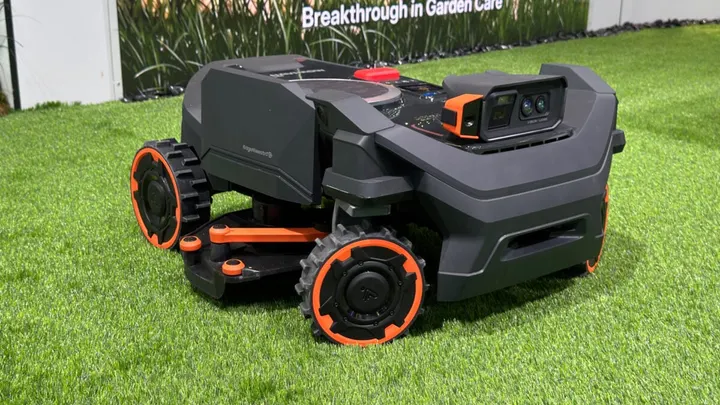
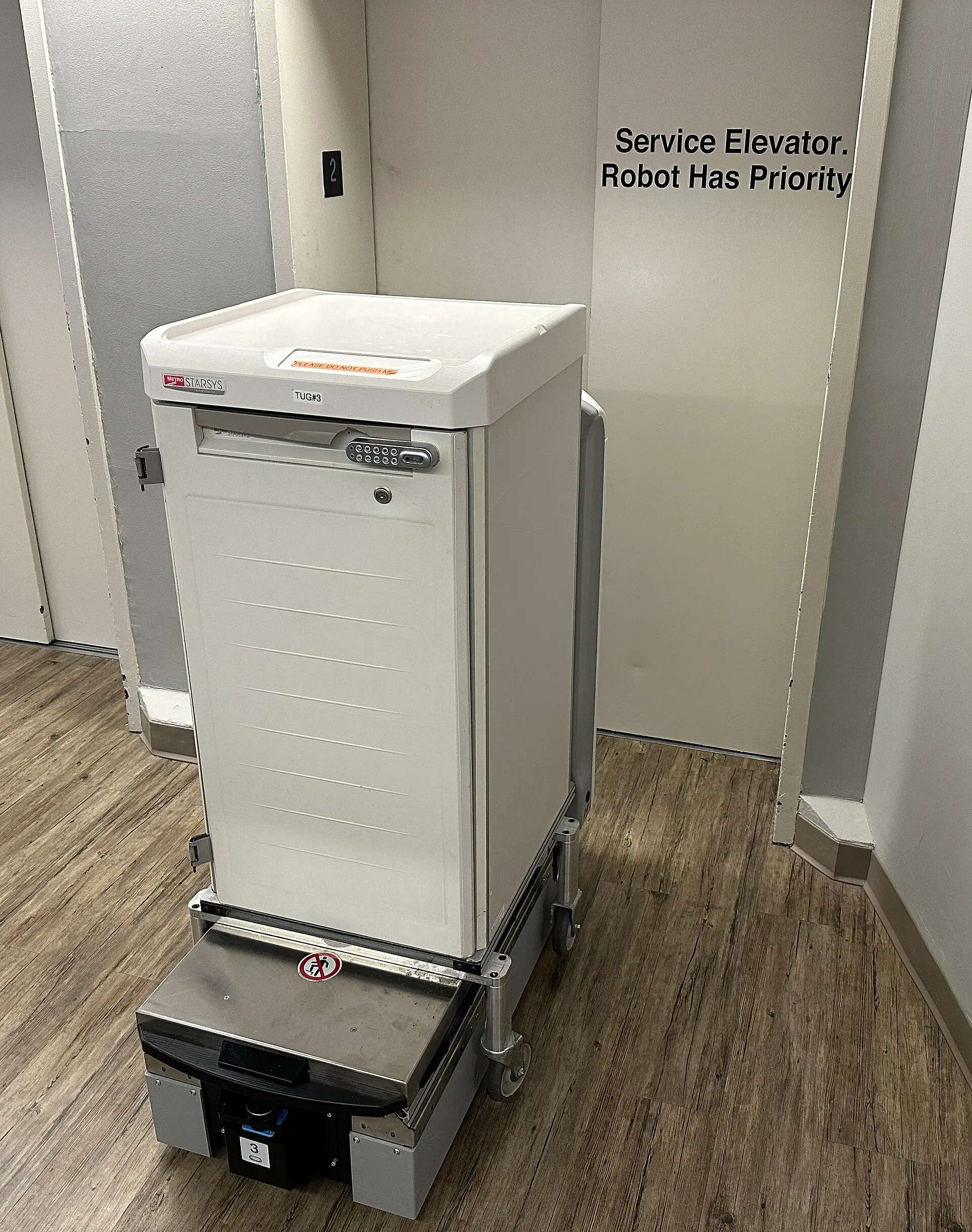
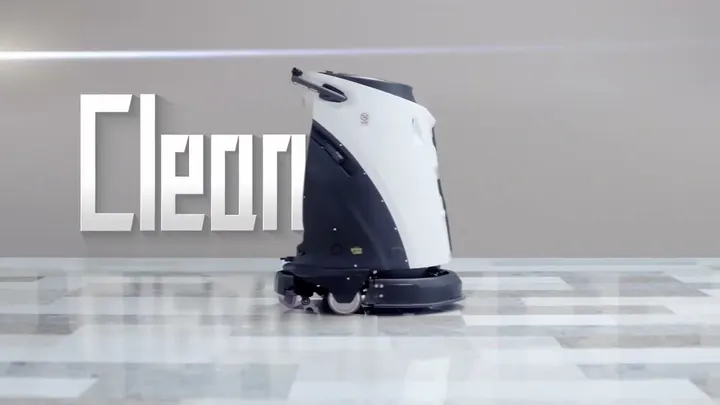
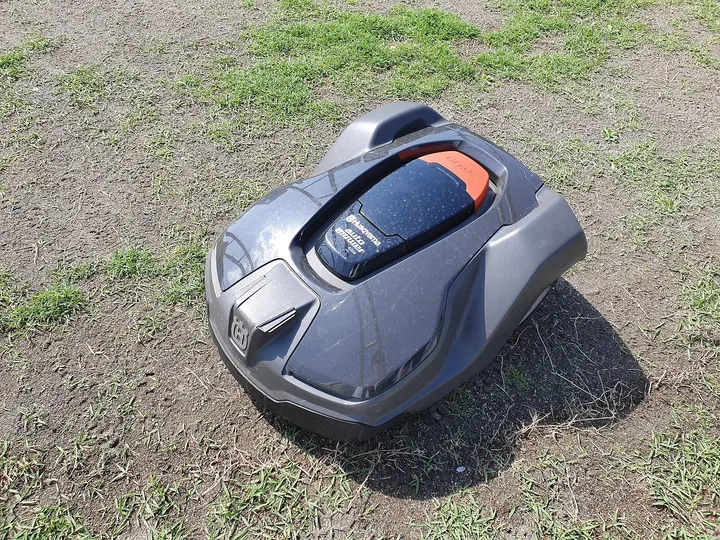
A delivery robot moves meals and linen between departments, a scrubbing machine works the corridors at night, and a mower keeps the grounds around the building.
- per delivery trip
- 10-40 kg
- of scrubbing per charge
- 3-6 h
- of lawn per mowing cycle
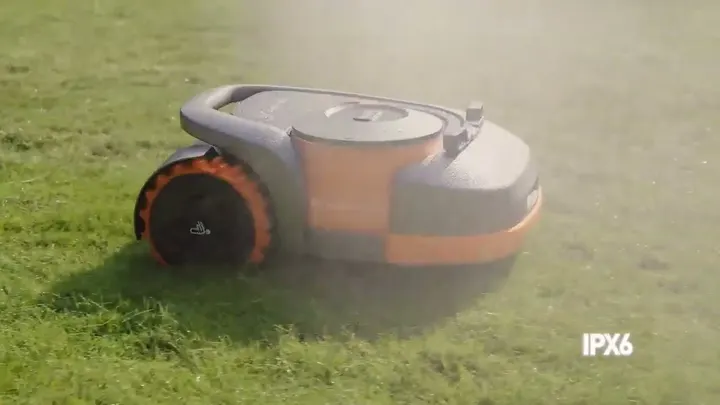
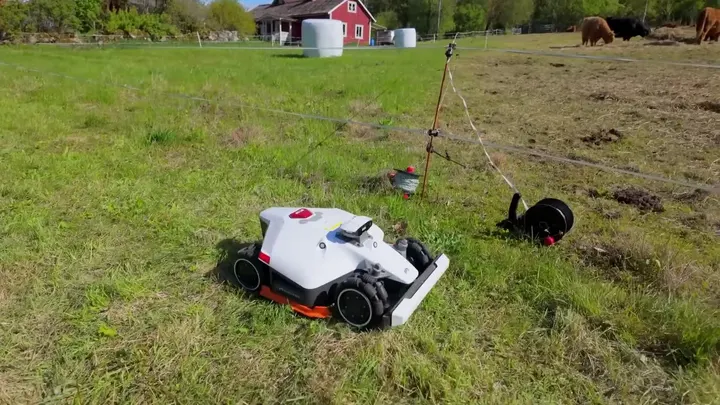
- 5000 m²
In a hospital or a care home most trips are the same few: meals, bedding, supplies and samples between departments. A delivery robot takes those trips over and frees staff for work at the bedside. A closed compartment with a lock keeps the contents separate, and a log records who collected the item and when.
Hygiene and floor
Floors are almost always sheet vinyl or linoleum with few thresholds, which suits a robot. The cleaning agent is chosen by the house protocol, not by the machine maker recommendation. After the shift the machine is rinsed and left to dry, because a wet dirty water tank is a risk in itself.
Quiet running and the night
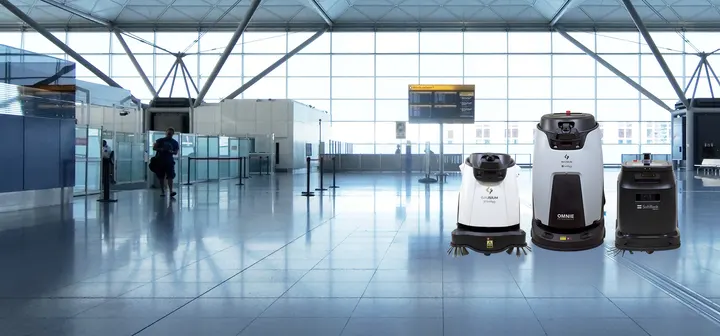
Rooms are not cleaned by robot. It covers corridors, waiting areas, the dining room and staff areas, usually at night, when the noise level matters. Before buying, check the declared working noise level and keep it low if the machine passes directly alongside rooms where people sleep.
The robot needs access to the lift and to doors under access control, otherwise it waits for a person at every obstacle. Wifi has to cover the corridors without gaps. Staff on shift need to know how to stop the robot, collect an item and report a fault, while full maintenance training goes to the technical team.
Recommended robots
Robotics in numbers
600+k
industrial robots were installed worldwide in 2025, up 11% on the year before.
5M
industrial robots are at work in factories worldwide, up 9% on the year before.
267robots
per 10,000 manufacturing employees in Western Europe, a record robot density.
Source: IFR World Robotics 2026, 2025 data; robot density: IFR, 2024 data.